I’ve just completed a semester exchange program. Typically imagined as an undergraduate rite of passage, graduate students rarely appear in narratives of semester sojourns, and already‑international doctoral students even less so. As not the imagined participants; we are assumed, perhaps rightly, to be too anchored to research timelines, funding structures, and visa constraints to move. But I began my PhD because I am, at my core, inquisitive — drawn to questions, patterns, and the ways language and ideas shape and are shaped by people and their movement. So, in that sense, the idea of a stint abroad felt less like a departure and more like a continuation of the intellectual restlessness that brought me to Hawai‘i in the first place.
My life has also unfolded across multiple geographies. As a Yorùbá daughter raised in London, and later as a mid‑career English language teacher in Spain, China, then Iraq, I developed a sensitivity to representation of identities, non-belonging, and the quiet negotiations of inhabiting spaces where my body is demographically unlikely. These experiences shape how I read institutions and what I value from the environments in which I work and learn. My first semester in Hawai‘i was difficult in ways I hadn’t anticipated. But counselling helped name that discomfort and, crucially, helped me realise it was not resilience I needed, but acceptance of my limits — an insight that shifted how I approached the rest of my doctoral journey.
Once I understood that I could choose differently, the administrative choreography began. I booked appointments with MiX (Manoa International Exchange) advisors to understand the multi‑step process; checked with ISS about visa implications; and importantly crunched the financial numbers. I kept my advisor apprised at every stage, and updated the Grad Chair as possibility became reality. All of this unfolded alongside the graduate‑student juggling of coursework and teaching. The exchange was not spontaneous, it was a slow assembling of permissions, documents, and institutional alignment. I submitted the MiX application (which is actually only for the chance to be nominated by UH for the exchange program) in March 2025. Then I waited. Only after quiet, behind‑the‑scenes approval did MiX apply to a host institution on my behalf.
Selecting a host university required some precision. I submitted four options to MiX guided by research alignment and the practicalities of language. This narrowed my list to Australia, Canada, and two universities in New Zealand. I compared course catalogues, checked term dates, and looked for faculty whose interests overlapped with mine. University of British Columbia (UBC) rose to the top because it offered courses I could meaningfully integrate into my doctoral trajectory and a term structure that allowed me to enrol without administrative friction.
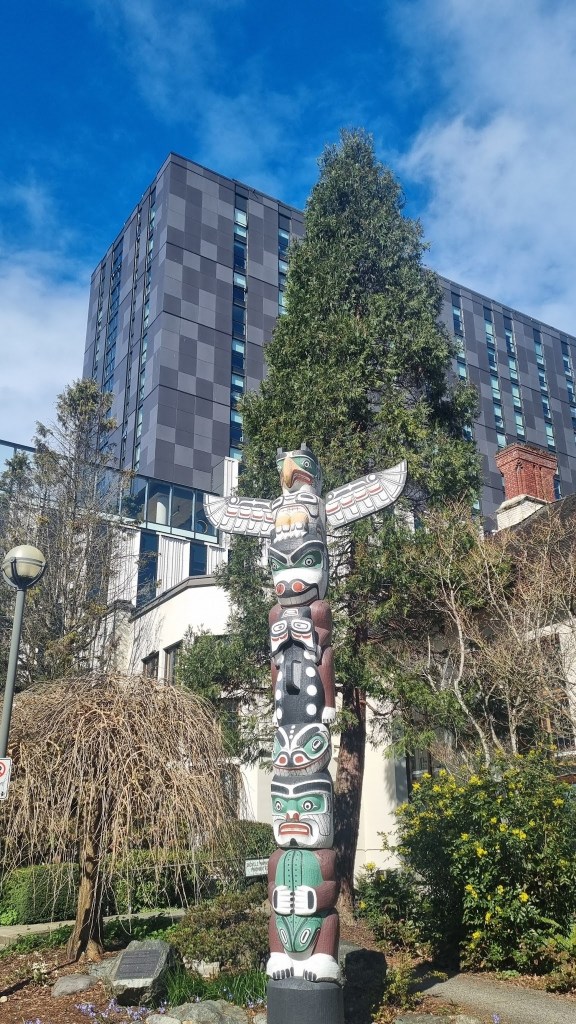
Once arrived, I snuggled into my campus housing under the heavy January skies of the Pacific Northwest. Despite the dreary weather, there were aspects of my time at UBC and in Vancouver that I thoroughly enjoyed. Classes opened new intellectual pathways; an undergrad Middle East Studies course encouraged me to queer my perspectives and consider “what is the higher purpose of ‘the intellectual’ anyway?”. With a Discourse Analysis in Education Research group, I spent the semester tracing chronotopes through a gratifying depth‑over‑breadth approach.
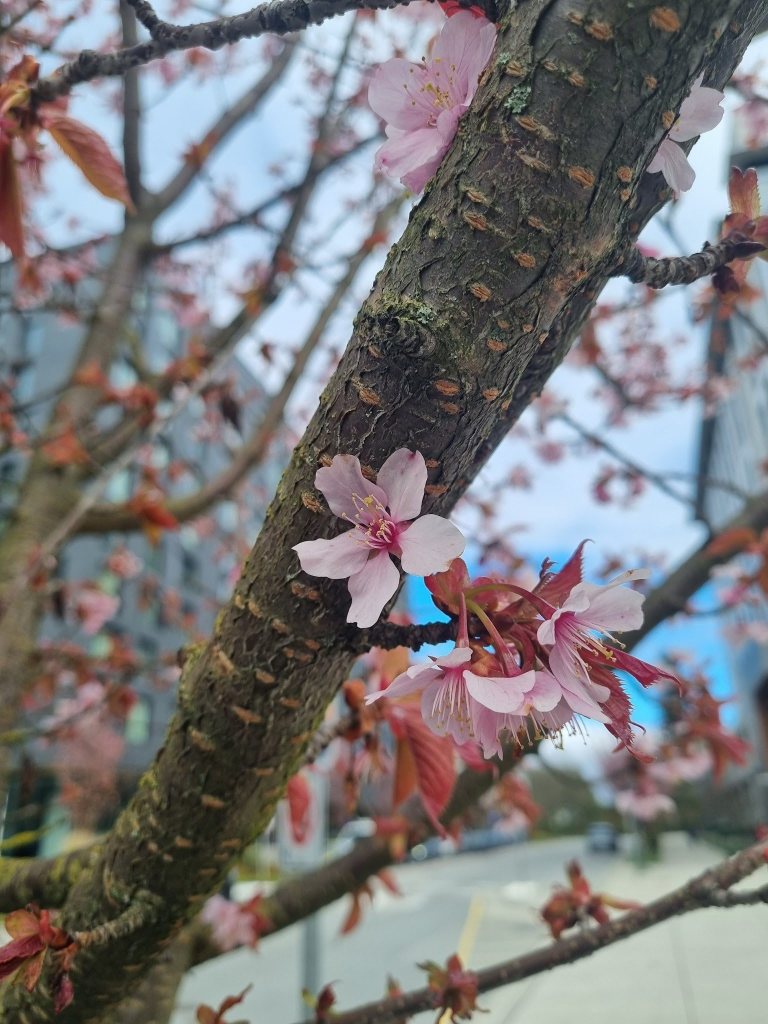
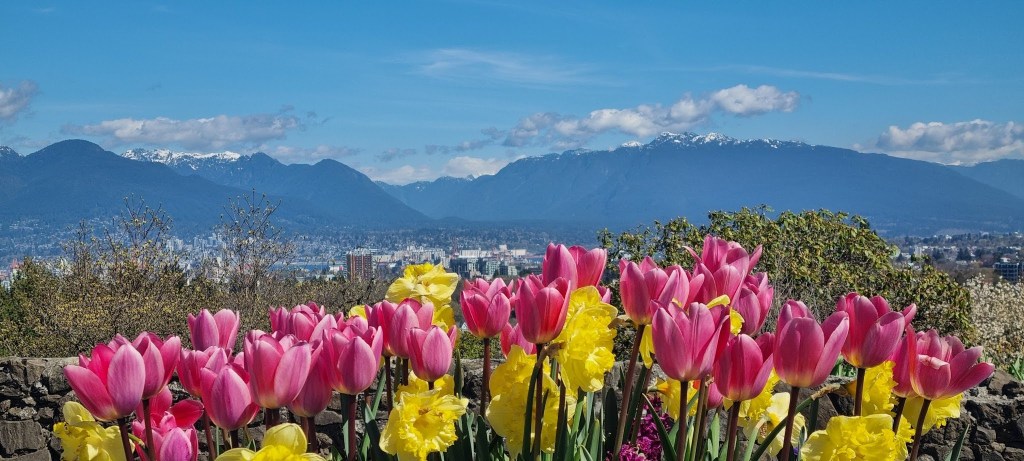
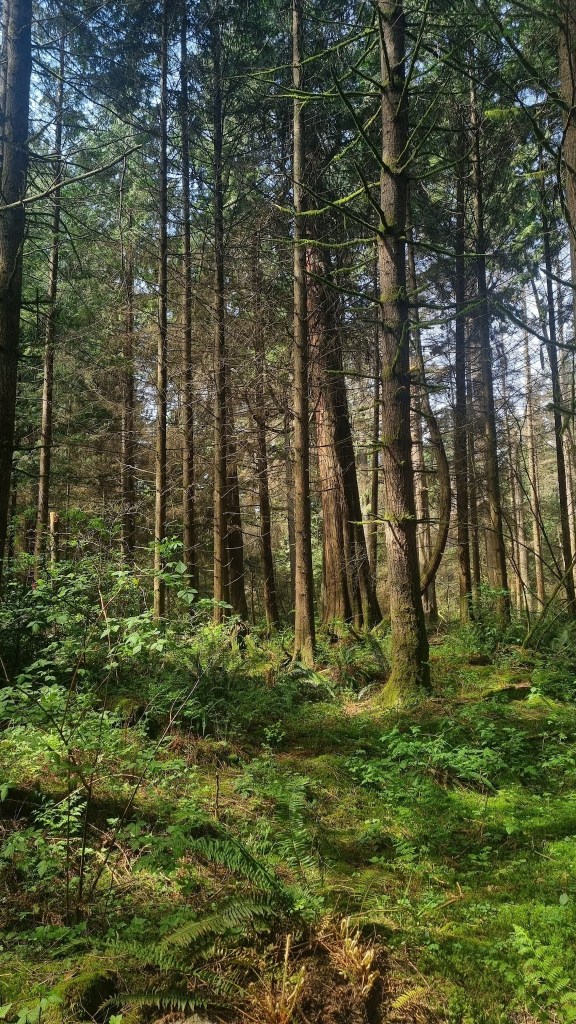
Outside the classroom, Vancouver also bestowed quiet gifts: evergreen and glacial vistas in all directions, rainy days that became writing days, blue-sky days that beckoned me into Stanley Park, and a spring that sprang so exuberantly it rivaled hanami in Tokyo. I enjoyed the food, wandering aimlessly, observing the linguistic landscapes of the hən̓q̓əmin̓əm̓* language of the xʷməθkʷəy̓əm (also written as Musqueam), and taking part in a weekly intercambio de idiomas to break up academic life.
*After much consideration, Musqueam formally adopted symbols from the North American Phonetic Alphabet (NAPA) for the hən̓q̓əmin̓əm̓ alphabet. NAPA was chosen because of its specialized symbols that are designed to be an accurate language documentation and teaching tool, especially for Indigenous languages within North America. Source: Language – Musqueam
The structural constraints of my position as an exchange student were nevertheless evident; I was enrolled but not embedded at UBC. I had a student number, but no department, no cohort, and no local advisor. Although faculty and peers were generous, I navigated the university largely independently: finding classrooms on a campus the size of a small town, and piecing together information that would have been obvious to someone more rooted.
Vancouver itself, reputed in subreddits to suffer from a “freeze” unrelated to weather, was not a fun nor vivacious city for me. Perhaps it was the season, or the particularities of my preferences, but the social atmosphere felt subdued. The cityscapes were stunning, especially in spring, yet the emotional temperature hovered somewhere between ‘politely nod’ and ‘please don’t make eye contact!’ I felt the absence of communal exchanges that makes a place feel warm. Despite, or perhaps because of this, the exchange created a spaciousness I appreciated. I was given time to read deeply, let ideas settle rather than rush toward articulation, and write with non-attachment.
And with the semester end I returned home, carrying a clarity that only distance makes possible. What this exchange offered was less a new cultural encounter than a subtle reorientation: stepping just outside my usual position made academia’s broader assumptions, organizing logics, and cultural norms more visible. That slight sidestep also allowed a recalibration of myself, reminding me what I value in the work I do and how I choose to inhabit the halls of the academy.
If asked after all of this whether I would recommend an exchange to another international graduate student, the honest answer is it depends. On what one seeks and importantly whether it will be affordable without a GAship. No sugarcoating: participating in the exchange required absorbing real financial costs. Mobility is expensive and unless one secures funding, tuition, flights, housing, insurance, and the slow accumulation of daily expenses will burn a hole through to that first post PhD paycheque. I choose, with a child’s stubborn naïveté, to believe nothing I pursue is impossible. However, without financial, familial, and SLS encouraging support, the exchange would have been out of reach for me.
While a MiX exchange won’t curate instant belonging or a ready‑made community for graduate students (it’s not ‘study abroad’ after all), it will “expand your horizons” as they promise. The value of the exchange would be contingent rather than universal — shaped by positionality, temperament, and timing. I didn’t discover a new academic culture, but I did find a clearer sense of the systems I am navigating and how to do so in an honest way — which in the end may be the result that would appease even Reviewer 2.